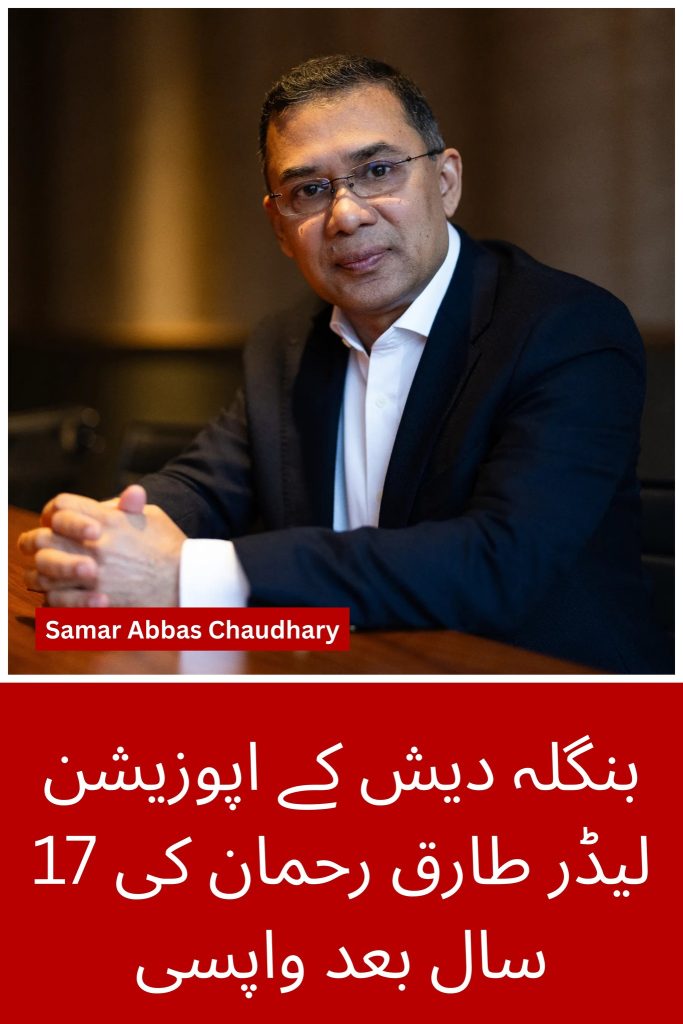
After spending nearly 17 years in self-imposed exile in the United Kingdom, Bangladesh’s prominent opposition leader Tarique Rahman has returned to his homeland. His arrival marks a significant moment in the country’s political landscape, especially as Bangladesh prepares for its upcoming national elections.
Tarique Rahman, the senior vice chairman of the Bangladesh Nationalist Party (BNP), landed in Bangladesh amid tight security and large gatherings of party supporters. Thousands of BNP activists welcomed him, viewing his return as a symbol of renewed hope and political revival for the opposition. Party flags, slogans, and banners filled the streets as supporters celebrated what they called a “historic homecoming.”
Background of Exile
Tarique Rahman left Bangladesh in 2008 during a period of intense political instability. At that time, the country was under a military-backed caretaker government, and many senior political leaders faced corruption cases and arrests. Rahman has long claimed that the charges against him were politically motivated and part of a broader campaign to suppress opposition voices.
After leaving Bangladesh, Rahman settled in London, where he remained for nearly two decades. During this time, he continued to lead and guide the BNP from abroad, often addressing party leaders through video messages and statements. Despite his absence from the country, he remained an influential figure in opposition politics.
Legal and Political Controversies
Over the years, Tarique Rahman has been convicted in several corruption-related cases by Bangladeshi courts. The government has maintained that these cases were legitimate and based on evidence, while the BNP has consistently argued that the verdicts were unfair and politically driven.
Human rights groups and international observers have at times expressed concerns over the use of legal actions against opposition leaders in Bangladesh. Rahman’s supporters say his long exile was forced by political pressure rather than personal choice.
Timing Before Elections
Rahman’s return comes at a critical time, as Bangladesh moves closer to its next general elections. The BNP is expected to play a major role in the polls, challenging the ruling Awami League, which has been in power for several consecutive terms.
Political analysts believe that Rahman’s physical presence in the country could strengthen the opposition’s campaign. His return may energize party workers, unify leadership, and attract undecided voters. Many see him as a potential prime ministerial candidate, although no formal announcement has yet been made.
In a brief statement after his arrival, Rahman thanked his supporters and said he was returning to “serve the people of Bangladesh and restore democracy.” He also repeated his claim that he had been a victim of political persecution and said he trusted the people to judge his actions.
Government Response
The government has responded cautiously to Rahman’s return. Officials have stated that the law will take its course and that no one is above the law. Authorities have also emphasized the importance of maintaining peace and stability during the election period.
Security has been tightened in major cities to prevent any unrest linked to political gatherings. So far, no major incidents have been reported, and the situation remains calm.
Public Reaction
Public reaction to Rahman’s return has been mixed. BNP supporters see it as a turning point and believe it will help restore balance to Bangladesh’s political system. Many ordinary citizens, however, remain cautious, focusing more on issues such as inflation, employment, and governance rather than political personalities.
Some analysts argue that while Rahman’s return is symbolically powerful, the opposition will need clear policies and unity to challenge the ruling party effectively.
What Lies Ahead
Tarique Rahman’s return after 17 years in exile has undoubtedly reshaped the political conversation in Bangladesh. Whether he can translate this momentum into electoral success remains to be seen. Much will depend on how the BNP organizes itself, how legal issues are handled, and how voters respond in the coming months.
As Bangladesh approaches a crucial election, Rahman’s homecoming adds a new chapter to the nation’s political story one filled with expectations, challenges, and uncertainty.